What age are you looking for?




What attracts you in a match?


Dating apps are now a common way for Americans to find love. This article looks at Bumble and Hinge, focusing on their use for long-term relationships. It discusses how the apps guide user behavior, features important for commitment, and what U.S. studies and company data tell us.
Bumble highlights a women-first approach to messaging. It also offers tools for empowered first steps. In contrast, Hinge promotes itself as “designed to be deleted.” It tries to spark deep conversations through detailed profiles and creative prompts. This comparison of Bumble vs Hinge examines their impact on meeting others and starting relationships.
You’ll get to know the differences in their matching methods, how to set up profiles, how messaging works, and safety precautions. I’ll cover demographic trends, success rates from organizations like Pew Research Center and Match Group, cost details, extra features, and how to test each app for anyone wanting to find love in the USA.
This guide provides U.S.-specific, fact-based advice. It aims to help you pick the top dating app for serious relationships. It reflects research, official info from Bumble Inc. and Match Group, and user reviews.
Key Takeaways
- Bumble vs Hinge for Serious Relationships: both can lead to long-term partnerships in their ways.
- The ideal dating app varies if you like women to message first (Bumble) or prefer conversational depth (Hinge).
- Utilize profile prompts and pictures to show you’re serious about a relationship on any platform.
- Though paid options can help in finding matches faster, nothing beats sincere intent and engaging messages.
- To decide your preferred dating app style in your quest for love online in the USA, compare actual user feedback and test both apps briefly.
Bumble vs Hinge for Serious Relationships: Honest Comparison
Choosing between dating apps shapes your dating life. This guide helps US singles pick the best option. Read for practical differences and an easy choice method.
Why this comparison matters for singles in the United States
Dating apps are big in American love life. The app you choose impacts your time and dating success.
Each city has different dating expectations. Bumble’s rule that women message first affects who talks first. Features like this matter.
Many work hard on their profiles and even pay for better chances. Making a wise app choice can save time and increase the chance to meet someone serious.
Primary differences at a glance: approach, user base, and outcomes
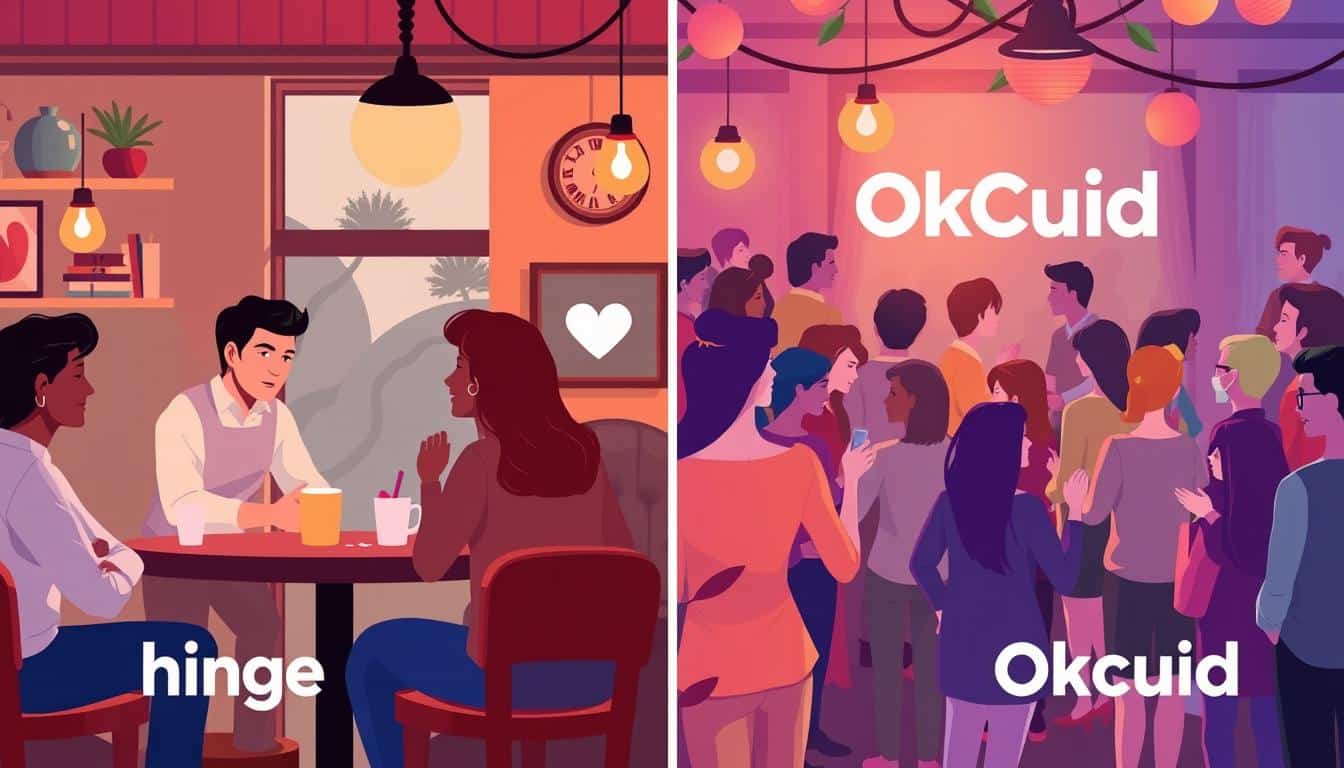
Bumble emphasizes empowerment with women starting chats. Hinge focuses on detailed profiles for deeper connections.
Bumble and Hinge both have users wanting different things. But Hinge users often look for lasting relationships. Bumble is more mixed.
The app designs affect talks. Hinge leads to more meaningful chats. Bumble reduces ghosting but limits getting-to-know-you time.
How to use this guide to choose the right app for you
Think about what is key for you: effort in making profiles, how messaging works, local user base, and premium features.
Test both apps for free using this article’s advice. Note the serious conversations and matches interested in commitment within 1–2 weeks.
- Measure meaningful conversations after two weeks.
- Track the share of matches seeking committed dating.
- Count in-person dates and rate how quickly connections move toward exclusivity.
Try paid options if matches don’t impress. This will test if paying helps. Choosing a dating app becomes easy with this method.

App Features and User Experience: Matching, Messaging, and Profiles
Both apps help singles find love, but in unique ways. They offer different features like matching and messaging. This makes the user experience vary. Here, we compare these features to quickly show the differences.
Matching algorithms and who sees whom
Bumble uses your location, how you swipe, and shared interests to suggest matches. Hinge looks at your likes on prompts and photos. It also considers how often you interact and how close you are.
Hinge introduces you to people who share your values, thanks to its “Most Compatible” feature. Bumble makes you decide quickly and encourages women to make the first move in straight matches. Matches expire in 24 hours unless you act.
Both apps let you pay to be seen more or get more time to start a conversation.
Profile setup: prompts, photos, and personality signals
Bumble focuses on good photos and short bios. It uses badges to show things like if you’re a verified user. People usually glance at profiles quickly because of swiping.
Hinge asks for longer answers and a variety of pictures. Features like “My Virtues” help you show who you really are.
To stand out, use a clear photo of your face. Add a few pictures of you doing things. Fill prompts with details that make people curious. Say what kind of relationship you want.
Messaging mechanics and conversation starters
On Bumble, women have to message first in straight matches. You have 24 hours to reply. The app’s features help you find something to say. Paying more can make you more visible.
Hinge lets anyone start a conversation by commenting on something specific from a profile. This makes it easy to begin talking right away.
Try starting with something from their profile, or ask about something they’re interested in. Make sure your message matches their profile’s style.
Safety features, verification, and moderation
Bumble helps keep you safe with selfie verification and tools to report bad behavior. It offers a safety guide and lets you share your date plans with friends. The app makes sure everyone acts nicely.
Hinge has similar safety measures, like photo verification and reporting. With Match Group’s help, it keeps things respectful.
Even with these safety tools, always pick public places for meetings and let a friend know where you’ll be.
User Demographics, Intentions, and Success Rates for Serious Relationships
Comparing Bumble and Hinge helps singles decide where to spend their time. People in their young adult years often use both. Small differences in age and location can affect the quality of matches. Read on to learn how these factors impact real dating outcomes.
Typical age ranges and location concentrations in the U.S.
Users aged 25–34 are most active on both apps, with good numbers in the 18–24 and 35–44 age groups. Hinge draws slightly older users looking for long-term relationships. Bumble is popular with those in their early to mid-20s.
Big cities like New York, Los Angeles, and Chicago have the most users. People in cities and suburbs find matches quicker and have more choices. In rural areas, there are less active profiles, leading to fewer matches.
Reported relationship intentions: casual dating vs. long-term
Many users are open to both casual and serious relationships. Hinge is designed to encourage users looking for commitment. Bumble lets users clearly state their dating preferences.
Neither app has only users looking for serious relationships. To find someone with similar goals, check profiles carefully and use filters. Being clear about your dating goals helps attract the right match.
Available data and studies on success rates and relationship outcomes
Studies confirm online dating can lead to long-term relationships and marriages. Successful matches often come from detailed profiles and meaningful conversations.
Comparing Bumble and Hinge, direct studies on long-term relationships are scarce. But reports suggest Hinge is good for serious talks, while Bumble discourages unwanted behaviors. Look at metrics like how conversations lead to dates to see how well you’re doing.
User testimonials and real-world examples
Hinge prompts lead to deep first conversations, say many users. These talks often turn into lasting relationships. Bumble users like that women can make the first move, which helps quickly find good matches.
Both apps have success stories, despite instances of ghosting and mismatched intentions. Daters advise being clear about what you’re looking for, engaging with likes on prompts, and moving to calls to test if there’s real chemistry.
- Bumble demographics tend to show younger urban clusters and a mixed intent distribution.
- Hinge demographics skew slightly older with more users signaling long-term interest.
- Track your own dating app success rates by measuring replies, dates, and follow-ups.
- Monitor relationship outcomes online dating by noting how many matches convert to ongoing partnerships.
- Consider dating app user intentions USA when choosing filters and writing your profile.
Cost, Premium Features, and Value for Long-Term Dating
When looking for love, how do you balance cost and features? We’ll explain what’s free, what extra you get when you pay, and which features really help. Try these tips to see if you’re getting your money’s worth, without spending too much first.
Free features that support relationship-focused dating
Bumble allows setting up your profile, swiping, and messaging if a woman makes the first move. You get some basic filters and occasional free boosts too. On Hinge, you can respond to prompts, like, and comment on profiles. Messaging starts after a match. Try both apps for free to see which has better matches for you.
Paid tiers compared: what each unlocks for better matches
On Bumble, prices vary by age, device, and how long you subscribe. Upgrade to get unlimited swipes, see who liked you, and use travel mode among other benefits. Hinge’s premium service also lifts limits on likes, shows you who’s interested first, and offers more preferences. Roses boost your visibility as well.
Which paid features matter most when seeking a serious relationship
Look for features that help you find quality matches fast. Knowing who likes you helps narrow your choice. Filters and dealbreakers ensure better matches. Unlimited swipes matter if you’re picky. On competitive dating scenes, boosting your profile makes you stand out. Bumble’s rematch and extend features also save matches.
Budgeting tips and trial strategies to test each app
First, use the free versions for one or two weeks to see if people seem serious. Next, try short subscriptions or single-week trials to see which one works better. Start with one paid feature, like seeing your likes, to see if your dating life improves.
Give yourself a budget, treating dating apps like any trial service. Spending $15 to $40 a month can show if it’s worth it. Increase your budget only if the app leads to real dates that fit your goals.
Conclusion
Deciding on the best dating app for relationships comes down to your priorities. Hinge is often the top pick for those seeking long-term bonds. It uses prompts to help users share more about themselves. This method leads to better matches in U.S. cities.
Bumble is great for users who favor a women-first approach and strict safety measures. It has a large user base, offering a variety of matches. However, intentions among users can vary widely. For safety and a sense of control, Bumble is a strong choice.
When choosing a serious dating app in the USA, think about what matters most to you. If you like profiles that encourage sharing and aim for relationships, Hinge is a good start. If you value having the first word and strict rules, try Bumble. Running both apps is also an option if you have the resources.
Here’s a quick guide: improve your profile with good photos and clear prompts that show you’re serious. Be upfront about what you’re looking for. Try the free versions for a week or two. Consider short paid trials to see what you like best. Aim to move chats off the app quickly to really connect. The verdict on Bumble vs Hinge? Both can lead to lasting relationships, but success depends on the quality of profiles, your local dating scene, and how deliberately you use the apps. Experiment to find the right fit for you.