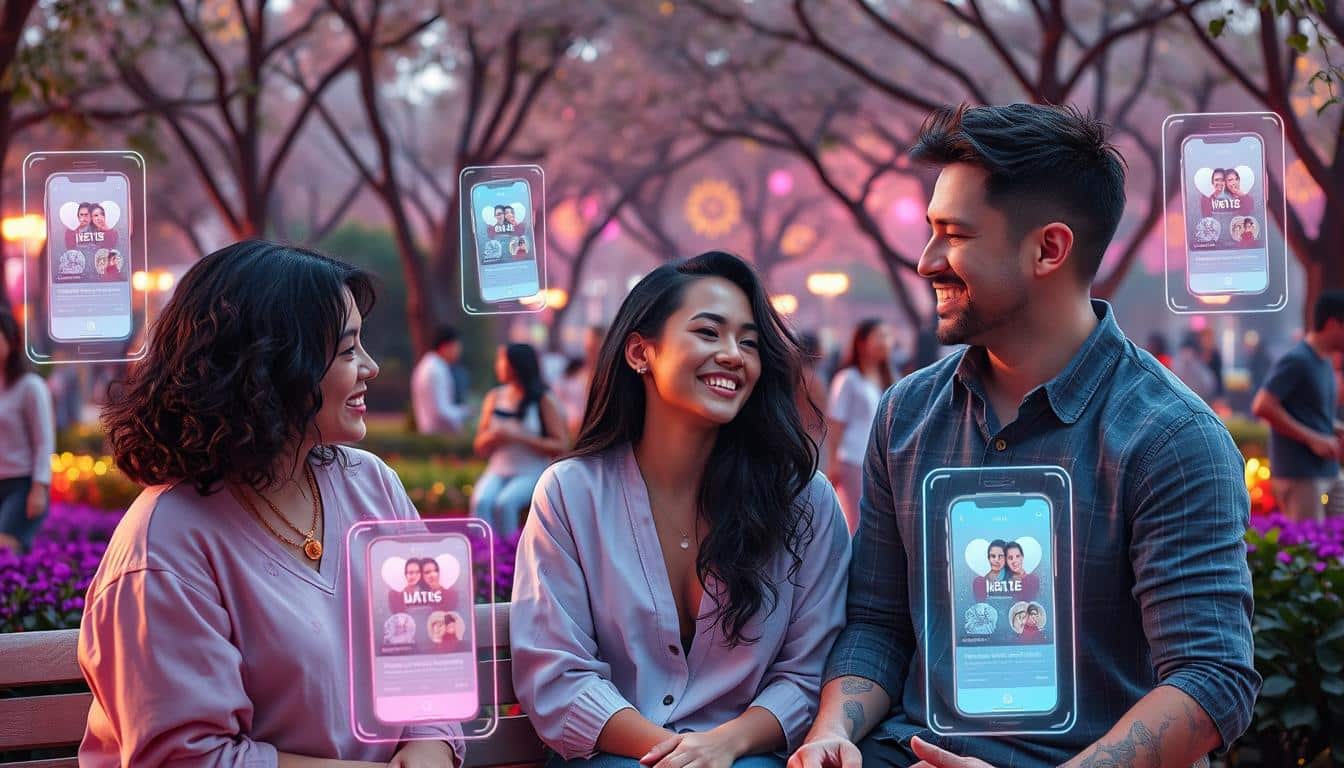
Millions of Americans use popular dating apps to find love, casual partners, or new friends. This guide covers how dating apps help US users. It includes mainstream platforms like Tinder, Bumble, Hinge, Match, eHarmony, OKCupid, and Plenty of Fish. It also covers niche services like Grindr, HER, JDate, Christian Mingle, Feeld, and hobby groups.
We aim to help U.S. readers understand the crowded dating app scene. We compare top dating apps for various goals. Plus, we offer tips on safety, making a good profile, and choosing subscriptions. Whether looking for love or specific matches, we highlight key app features. We also explain why some apps work better in certain places or for certain goals.
Anúncios
People of all ages use these apps, but success varies by effort and situation. Some apps are great for casual dates. Others focus on long matches with detailed profiles and compatibility quizzes. We provide comparisons and examples to help you pick the best app.
The main focus here is on popular dating apps and finding meaningful connections in the U.S. Next, we’ll look at why popular apps are effective and how they’ve changed U.S. dating habits.
Key Takeaways
- Popular dating apps serve varied goals: casual meetups, long-term relationships, and new friendships.
- Mainstream platforms include Tinder, Bumble, Hinge, Match, eHarmony, OKCupid, and Plenty of Fish.
- Niche options like Grindr, HER, JDate, Christian Mingle, and Feeld improve relevance for specific communities.
- Effectiveness depends on location, user intent, and the time invested in profiles and messaging.
- Safety, verification, and subscription choices are key factors when using dating apps in the US.
popular dating apps Overview and Why They Work
Now, people meet online instead of bars or parties. This switch is why dating apps are key in the US today. They offer quicker matches and connect users widely, unlike old ways.
At first, young adults loved using apps. Now, all ages use them to find love. This change made meeting folks from different ages and places possible.
How dating apps changed modern dating in the United States
Meeting someone used to be about luck and who you knew nearby. Today, apps use algorithms and profiles to suggest matches. This digital-first approach is now a top way to start relationships.
Apps let you meet people from anywhere. They help users find others with the same hobbies or backgrounds. Because of apps, the way we date has changed.
Key features that make an app popular: matching, messaging, safety
How apps match people can vary. For example, Tinder uses swiping, while Hinge and eHarmony use quizzes. Bumble and Coffee Meets Bagel offer mutual matches or daily suggestions. These methods define how apps feel to use.
Good messaging features keep users talking. Things like icebreakers, voice notes, or video chats help start conversations easier. Having prompts also helps keep people interested.
Having strong safety tools builds trust. Features like photo checks, safety badges, and easy reporting make users feel secure. Apps known for these can keep more cautious users.
Different user goals: casual dating, serious relationships, friendships
People choose apps based on what they want. Tinder and Bumble are popular for casual dates. Hinge, eHarmony, and Match are seen as better for serious relationships. For finding friends, Bumble BFF and Meetup-style options are useful.
Apps work best when they let users be clear about what they’re looking for. Matching people with the same dating goals means less time wasted. This is how app design meets dating needs.
Next, we’ll look at which apps are best for finding a long-term partner and what makes them stand out.
Top dating apps for finding serious relationships
Choosing the right platform is key when you’re after commitment. The top apps for serious relationships offer in-depth profiles, engaging prompts, and features encouraging meaningful connections. Many find success with apps designed for long-term matching because they focus on compatibility and potential.
Profiles, compatibility tests, and algorithm-driven matches
eHarmony, Match, and Hinge create profiles that share more than just looks. They include detailed bios, essay questions, and pictures that reveal your story. eHarmony uses a thorough questionnaire for its matches. Hinge encourages conversations with its focus on prompts. Match lets users detail their lives to better the search.
Algorithms then work by looking at your preferences, activities, and answers to tests. They consider your values, habits, and how you interact to find matches likely to last. A good profile and staying active make algorithms work better for you, raising your chances of finding a great match.
Success stories and statistics for long-term matches
Dating apps share success rates. eHarmony boasts lots of long-term relationships due to its focused approach. Match shares stories of users who met, moved in together, and even got married. Studies say more marriages start online now, not through traditional ways.
Your success hinges on how much effort you put in and being honest, as well as the size of your local dating scene. While success stories show what’s possible, everyone’s experience is unique. People with clear profiles and who interact well often find good long-term matches.
Subscription tiers and premium features to consider
Premium services vary by app but often include things like more visibility, better filters, and unlimited likes. Match and eHarmony have higher-tier options that let you message more and search better. These can help you find more compatible matches.
Paying for premium can make you more visible faster, but a great profile and active participation can also get you matches without paying. Start with shorter plans to see if the premium benefits are worth it. Judge the value by the quality of interactions and shared values, not just by the number of messages.
Next, you will read about apps built for casual dating and quick meetups.
Best apps for casual dating and hookups
Casual dating apps like Tinder, Bumble, and Plenty of Fish let you meet people easily. They offer quick matches and simple ways to chat. This makes finding someone close by for fun times without long-term pressure possible.
How to set expectations and communicate intentions clearly
Be clear about what you want by saying it in your bio. Saying you’re into casual meetings or just looking for friends helps. On Bumble, mention what you’re looking for; on Tinder, a quick note in your profile does the trick.
When messaging, stay polite but to the point. Ask what the other person is looking for early on. Always confirm consent before meeting up. This way, things are less awkward and trust can build faster.
Privacy settings and location controls
Location settings play a big part in who you match with. Adjust your privacy settings to control how much others know about where you are. You can also set distance filters to change who you see.
On iOS and Android, look at discovery settings. Apps like Tinder and Bumble let you control who sees your profile. Turning off app permissions stops the app from knowing your location when you don’t want it to.
Typical user demographics and peak activity times
Most people using these apps are aged 18–34, especially in cities. You’re more likely to get fast replies in urban areas.
Evening times and weekends are when these apps buzz the most. Sunday nights are especially active for messages and new matches.
To get the most out of casual dating apps, use these tips. They’ll help you match better and keep your personal information safe. For more advice, check out Tinder’s tips and Bumble’s features for casual dating.
Dating apps with strong safety and verification features
Many dating platforms focus on safety for users. They have tools to lessen fraud and harassment. These tools verify users and help report bad experiences.
Photo verification, ID checks, and background screening options
Apps like Tinder and Bumble confirm users with selfie matching. Hinge also encourages steps to validate users. A verified badge on a profile means it’s more trustworthy and reduces catfishing risks.
Not all apps do complete background checks. Yet, some work with others for optional checks or have special safety features. This added step offers more protection when needed.
In-app reporting, blocking, and safety resources
Apps make it easy to report abuse and block users. Reports go to a team, and blocking stops any more messages. This helps keep users safe.
They also have pages for safety tips and help. For serious issues, there’s customer support. Some apps let friends know where you are on a date for extra safety.
Tips for staying safe on dates arranged through apps
Here are some safe dating tips. Always meet where others are around, tell a friend your plans, and get there on your own. Before meeting, use the app’s video call to check the person’s identity.
Avoid too much alcohol early on. Look for signs the profile is real, like social media links or friends in common. Use features like verified profiles. If something seems wrong, report or block the person in the app right away.
- Use photo verification dating apps when possible to reduce risk.
- Consider background checks if you plan ongoing contact or a serious relationship.
- Rely on in-app reporting to document issues and prompt platform action.
Dating apps for niche interests and communities
People often like apps that focus on important life values or hobbies. Niche dating apps help users find others with common interests like culture or lifestyle. This makes starting meaningful conversations easier.
LGBTQ+ focused apps and inclusive features
LGBTQ apps such as Grindr, Scruff, and HER cater to various queer community members. They offer more gender and orientation options and focus on safety. This helps reduce the risks of harassment and outing.
Religious, hobby-based, and demographic-specific platforms
There are dating apps for religious singles, like JDate for Jewish folks and Christian Mingle for Christians. Apps like Muzmatch and BLK cater to Muslim and Black singles, respectively. Then, there are hobbies apps, like Veggly for vegans and Tastebuds for music fans.
These platforms allow filtering by faith, culture, and lifestyle. This makes it easier to find matches that fit into your daily life and future plans.
How niche apps improve match relevance
Sharing the same core values or hobbies makes conversations start off quicker. Profiles in niche apps show major compatibility factors upfront. This helps avoid wasted time on poor matches.
However, these apps might have fewer users in some areas. But generally, they lead to better talks and more meaningful relationships.
Next section offers practical tips for building an effective profile on general and niche platforms.
How to create a winning profile on dating apps
To make your profile stand out, focus on making it clear and honest. This will help you find people who match with you. Your photos, bio, and messages should all tell your story consistently.
Choosing photos that attract the right matches
- Start with a clear headshot that shows your face. Avoid heavy filters.
- Add a full-body photo and a few that show your hobbies or travels.
- Use both candid and posed photos to keep your gallery genuine.
- Include at least one photo where you’re smiling and making eye contact.
- Don’t use group photos as your main picture. You should be the focus.
Writing a bio that reflects your personality and intentions
- Begin with a catchy opening line that shows who you are.
- Mention a hobby or favorite place to spark interest.
- Be clear about what you’re looking for to set the right expectations.
- Finish with a question or prompt that encourages a response.
- Look at other bios to stay original and true to yourself.
Messaging tips to get more replies and better conversations
- Start conversations with something specific from their profile.
- Ask open-ended questions to keep the conversation going.
- Match their tone and pace to build a connection.
- Keep your messages short and well-checked. Hold off on sharing too much too soon.
- Occasionally use voice notes or videos to catch their attention.
Use these tips little by little to see what works for you. Notice which photos and parts of your bio get the most replies. Then, tweak your profile based on what you learn to make it even better.
Costs, subscriptions, and maximizing free use of dating apps
When deciding between free and paid dating apps, think about your budget and what you’re looking for. Most apps let you start without cost. You get a few daily likes and can send messages. But, if you pay, you get extras. These can help you find matches faster, especially in big cities. They also let you look for very specific things.
Common pricing models: monthly, annual, add-ons
Subscription options usually include monthly, three-month, and yearly plans. The monthly option is good for trying it out. Yearly subscriptions make each month cheaper, good for those who are in it for the long haul.
Then, there are add-ons you can buy whenever you want. Things like visibility boosts, super-likes, and even travel features are available. Apps like Tinder and Bumble often sell these extras on their own.
Features worth paying for versus free alternatives
Certain paid features really stand out. For example, being more visible can help in crowded places. Unlimited likes and advanced filters let you search wider or more precisely. But, you might not need to spend money to get matches.
Keeping your profile updated and being active can also get you matches for free. Many people find success this way. Focus on good photos, a clear “about me” section, and keep conversations going before you think about paying.
How to trial premium features without overspending
Try starting with a one-month subscription to see if it’s worth it. Look out for discounts or deals from app stores. Remember to cancel it before it renews automatically if you’re not seeing better results.
Compare the premium features of different apps by trying them one at a time. Some apps offer trial periods or special deals. This way, you can see if things like boosts or advanced filters really help, without committing for long.
With the right approach, you can make the most of dating apps without spending a lot. Mix free features and careful upgrades. This way, you can keep your costs down while improving your chances of finding the right match.
Conclusion
Here’s what you need to remember about dating apps: Choose ones that fit what you’re looking for. Want a serious relationship? Pick apps that focus on deep profiles and matching based on compatibility. If it’s casual fun you’re after, go for apps with straightforward expectations and good privacy settings. Apps designed for specific groups, like the LGBTQ+ community or people with shared hobbies, can also lead to more meaningful connections.
Ready for the next steps? Start by defining what you hope to achieve. Then, try out a couple of apps. Make your profile stand out with great photos and a clear, honest bio. Before meeting up, establish some safety rules. Use features from apps like Tinder, Bumble, Hinge, or Match for added security. Consider premium options if they seem worth it.
Success in online dating requires patience and consistency. Taking small steps daily, like sending thoughtful messages or refreshing your profile, makes a big difference. Keep everything real and safe. Don’t forget to come back to these tips when you’re comparing apps or updating your profile. Following these suggestions will help you find better connections over time.