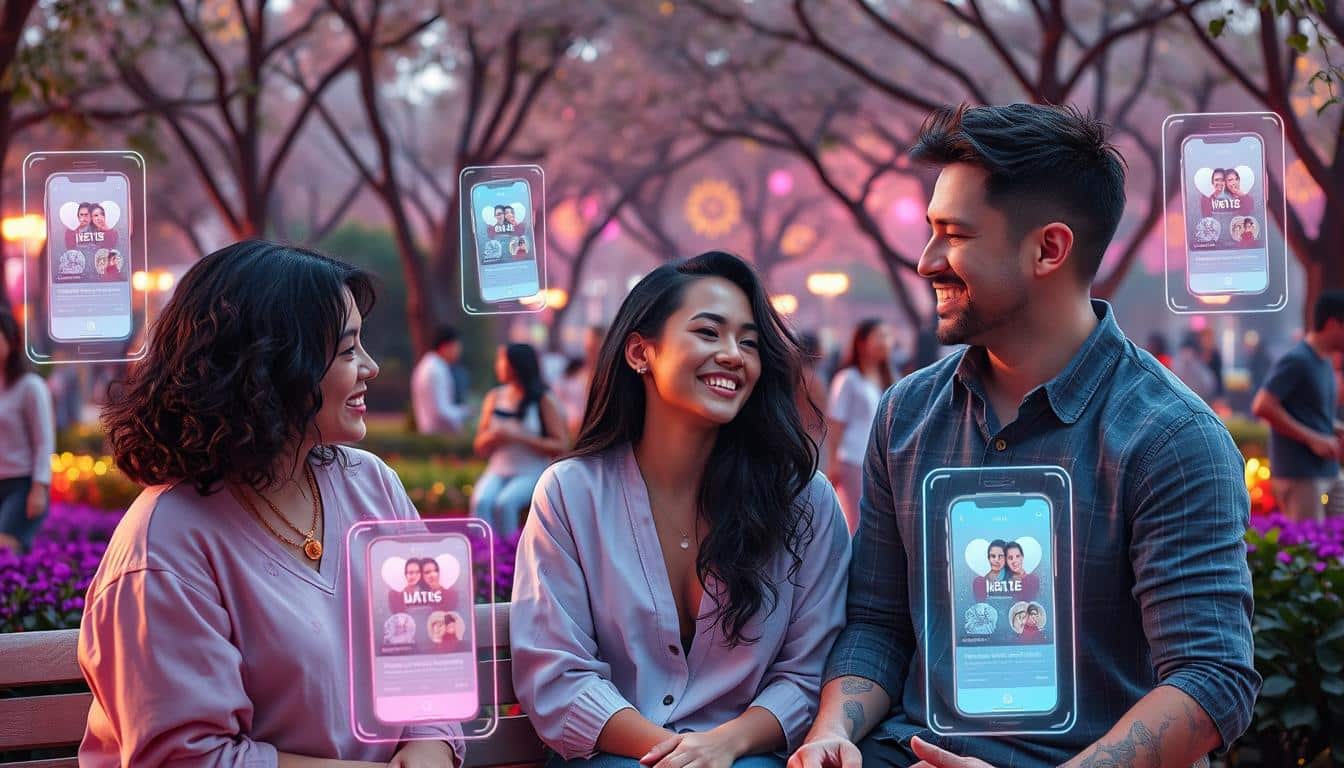
Looking for love or friendship? We’ve got you covered. This guide dives deep into the world of dating apps. It’s perfect for anyone in the United States hoping to find a special someone. We look at top dating apps and give you the inside scoop. This helps you figure out which app is right for your needs, whether you’re into serious dating or just want to keep things casual.
We explore a variety of apps. Whether you’re after a committed relationship, casual dates, or you’re part of the LGBTQ+, a faith group, or you love certain activities, we’ve got something for you. You’ll learn about free and paid app features, how to stay safe, protect your privacy, and tips to make your profile stand out. We aim to help you make the most of online dating in the United States.
Anúncios
This article is for single adults, whether you live in a big city or a suburb. It’s also for LGBTQ+ individuals, people from various religious and cultural backgrounds, and folks with unique hobbies. If you’re trying to pick between apps for long-term relationships or just curious about casual dating apps, we’re here to help. We’ll walk you through your options and what to consider when choosing.
In our article, we’ll mention terms like dating apps, the best dating apps, and dating app reviews often. This keeps our advice easy to find and relevant. We’ve organized the information into nine sections. They range from why choosing the right app is essential to ensuring your safety and privacy. Plus, we’ll compare apps and wrap up with our top recommendations.
Key Takeaways
- We cover a broad spectrum of dating apps to help you find your perfect match. This includes serious relationships, casual flings, and niche interests.
- You can expect detailed reviews. We compare features, costs, and which app fits which user best.
- Our guide includes advice on staying safe and private. Plus, tips on making your profile the best it can be.
- We’ll discuss when to use the app’s free version and when it’s worth it to upgrade.
- Our advice is tailored for all singles in the U.S., including LGBTQ+ and specific community daters.
Why Choose Dating Apps: Benefits and Trends
Dating apps have changed how people in America meet and date. Before, meeting someone meant going to bars or hoping for a chance encounter. Now, introductions often start online. This shift has led to a new normal in how we court and plan dates, even across long distances.
How dating apps changed modern dating in the United States
Apps like Tinder, Bumble, and Match have made online dating popular. They are widely used by young adults, particularly those between 18 to 34. But older singles are joining too, making the dating app crowd more diverse.
With these apps, your dating world grows. You can meet people far from your neighborhood. You can also find someone who shares your interests more easily. Plus, figuring out if you’re compatible happens quicker with texts and app features.
Common benefits: convenience, variety, and algorithmic matching
Dating apps are convenient. They’re always available and make it easy to find matches anywhere. This makes them a perfect fit for our busy lives today.
There’s also more variety. You can meet a wide range of people or find someone special in niche communities. Whether you’re gay, queer, Jewish, or Christian, there’s an app for you. This increases your chances of finding a good match.
Then, there’s smart matching. Apps use your behavior and preferences to suggest possible matches. For instance, Hinge and eHarmony offer unique prompts and compatibility scores to help you find a meaningful connection.
Trends to watch: video profiles, safety features, and AI matchmaking
Now, dating apps are using short videos and live audio to help you stand out. Inspired by TikTok, these features let you show off your personality. Apps like Bumble and Hinge have added video prompts for this reason.
Safety is becoming a big focus too. Dating apps are adding features like photo verification and emergency assistance. This helps protect users while they date online.
AI is improving how apps recommend matches and keep users safe. It helps spot fraud and suggests better matches. But this also brings up concerns about privacy and fairness. Despite these issues, these advances are making dating apps better.
Top Dating Apps for Serious Relationships
Choosing the right app is key to meeting people. This section reviews dating apps aimed at serious relationships. It discusses their features, the types of users they attract, and the costs of searching for a long-term partner.
Overview of relationship-focused platforms
eHarmony uses a detailed questionnaire and a compatibility algorithm to match users based on core values. Match.com is popular among various ages and has strong local user bases. Hinge focuses on prompts and conversation starters, branding itself as the app “designed to be deleted.”
These platforms offer deep questionnaires, compatibility matching, customized prompts, and guided messaging. These features are designed to help start meaningful conversations and build real connections.
User demographics and success rate considerations
Each platform attracts different age groups. eHarmony and Match.com generally appeal to people in their late 20s to 50s seeking serious relationships. Hinge attracts a younger audience, mainly mid-20s to 30s, focusing on lasting relationships.
Success rates are often shared by the companies through reports and user stories. It’s wise to look at the number of active users in your area. This can greatly influence your chances of finding a match. Large cities typically offer a wider pool of potential matches. Smaller towns might find success on niche or widely used platforms.
Pricing, subscription tiers, and value for long-term seekers
Choosing the right features is crucial. Look for unlimited likes, messages, advanced filters, read receipts, and profile boosts. These can improve your chances when you’re serious about finding someone. Long-term users often find better success with paid plans than with free accounts.
Always check for trial offers and read the fine print about refunds and auto-renewal. This helps you protect your wallet while finding the best dating app for your relationship goals.
Dating Apps for Specific Communities and Interests
Using the right app can make dating much easier. Niche apps focus on what people have in common, like beliefs or hobbies. This way, they can start better conversations and spend less time looking at profiles that don’t match.
Niche apps for LGBTQ+, religious, and cultural groups
LGBTQ dating apps like Grindr, Scruff, and HER are made for specific communities. They have safety features and profile options that respect users’ identities and preferences. These apps make it clear what users are looking for.
For the faithful, there are apps like Christian Mingle, JDate, and Muzmatch. They let users filter for things that matter in their faith. People can share their religious practices and values, helping them find better matches.
Hobby- and interest-based matching (outdoors, foodies, fandoms)
Apps that focus on hobbies connect people with similar interests. Whether it’s music, outdoor activities, or food, these apps create space for conversations. They connect people who love the same things.
Platforms like Instagram and TikTok have communities that lead to dating niches. By focusing on shared interests, people have a better chance of meeting someone special.
How niche apps improve match quality and engagement
Niche apps help in finding people with similar interests or values. They encourage better profiles and interactions. This improves the odds of going on real dates.
However, these apps might not have as many users, especially in less populated areas. Some people use a niche app along with a more popular one. This way, they can keep their specific searches while reaching out to more people.
Free vs. Paid Dating Apps: Features and Trade-offs
Deciding between free and paid dating apps depends on your desired features. Most start with free apps to get a feel for them. Upgrading is useful for those who want better filters and quicker matches.
Which core features are typically free
You can make a profile, add pictures, and look at potential matches for free. Tinder and Bumble limit how many likes you get daily. OkCupid lets you message more and share more about yourself without paying.
Free versions include basic filters and a set number of daily matches. These features are great in big cities with lots of users.
Premium features that can boost results
Paying for dating apps gives you unlimited likes and better search filters. Subscriptions like Tinder Plus and Bumble Premium offer unique benefits.
Adding on features like profile boosts and seeing who liked you can make you more visible. Some also offer safety features for extra security.
Cost-benefit analysis and when to upgrade
Stick with free versions if you’re just trying out dating apps or if you’re getting a lot of matches. Consider paying for more features when your matches start to decrease or you need more specific searches.
Try a one-month paid trial to see if it’s worth it. Look for discounts and consider using several apps to increase your chances.
- Tip: Track response rates before and after a subscription to judge impact.
- Tip: Compare dating app subscriptions across brands to find the best match for your goals.
Safety, Privacy, and Profile Optimization
Using dating apps well means finding a balance between connecting and being careful. This guide offers tips on staying safe, protecting your privacy, and making your profile stand out.
Essential safety features to look for
- Photo verification systems confirm that profile pictures are real, reducing fake profiles.
- Reporting and blocking tools help you manage who can contact you and alert the app’s team about misuse.
- In-app video calling allows you to see if you click with someone before meeting them.
- Location masking keeps your exact location private on your profile.
- Emergency or safety check-ins add an extra layer of safety for first meet-ups in public.
Privacy settings, data handling, and account security
- Find out how apps use your personal info, like where you are and if they share it with others.
- When you can, choose not to share extra info and read up on how long they keep your data.
- Two-factor authentication makes your account more secure.
- It’s best not to link too many social accounts or share where you work or live in detail.
- Pick dating apps that are upfront about how they protect your privacy and regularly update their security.
How to create a compelling profile: photos, bio, and prompts
- Start with a clear photo of your face and a full-body shot for diversity.
- Add pictures that show off your hobbies, like hiking or cooking, but avoid using group shots as your main pic.
- Keep your bio brief: mention what you like, dealbreakers, and something that starts a conversation, like a favorite coffee spot.
- To make a great profile, be specific, show your personality, and include a prompt that invites messages.
Smart messaging and meeting habits
- Start conversations by mentioning something from the other person’s profile to show you’re interested.
- Keep the chat alive by asking questions that need more than a yes or no answer.
- Once you trust someone, moving the discussion to a phone or video chat can safely confirm if you both feel a spark.
dating apps: Side-by-Side Reviews and Recommendations
Here, we offer a clear, focused comparison to help you choose the best app for your needs. We combine pricing info, who the app is best for, and what other users think. This way, you can make a confident choice between different options.
Comparison matrix — audience, best use case, price:
- Tinder: Targets the young; great for casual meets or broad exposure; free but offers paid options and monthly deals.
- Bumble: Lets women message first; suits those seeking some control without high costs; offers free and premium levels.
- Hinge: Focuses on those wanting relationships; perfect for commitment seekers; has a paid “Preferred” level, often with discounts.
- Match.com: Aims at an older crowd looking for relationships; uses subscription plans that offer discounts for longer commitments.
- eHarmony: Designed for deep matches leading to long-term relationships; needs a subscription post-onboarding tests.
- OKCupid: Balances flexibility with comprehensive free features; ideal for exploring one’s identity; includes optional paid boosts.
- Grindr: Caters to the LGBTQ+ men’s community; offers free service with added paid features for more active users.
Best picks by goal:
- Top choice varies: Hinge for serious connections, Tinder for the biggest audience.
- For lasting relationships: eHarmony and Match shine with their compatibility systems and older user base.
- For casual dates: Tinder and OKCupid offer flexibility; Pure and Feeld are for more unique setups.
- For specific needs: Grindr, HER, JDate, Christian Mingle, and Muzmatch cater to unique communities and traditions.
Real-user pros and cons:
- Hinge gets thumbs up for its engaging prompts; some find it less effective in smaller towns.
- Tinder offers lots of matches quickly; but some feel it’s too surface-level and has mixed message quality.
- Bumble gives power to women to initiate chats; though some find message replies can be slow.
- eHarmony & Match: Loved for meaningful matches; yet the time and cost might not suit everyone.
- OKCupid: Free expression tools are a plus; but the experience can be hit or miss for lasting connections.
When to try multiple apps and practical tips:
Begin with a mix: one app for serious dating and another for casual or specific interests. Check how well each app does for two weeks, then adjust based on the results.
Stay budget-smart by picking monthly plans when actively looking, and cancel before automatic billing. This way, you spend wisely while getting the most out of your app comparisons and recommendations.
If choosing between Tinder, Hinge, and Bumble, think about your location and what you’re looking for first. Trying two apps can show which one suits your goals better, leading you to the top choices for your dating needs.
Conclusion
Choosing the right dating app depends on what you want. For a long-term relationship, go for services that focus on that. If you’re into casual dating, select apps designed for informal meetups. For specific types of partners, choose niche platforms. This summary shows the importance of matching your goals with the right app.
When setting up your profile, think about safety and privacy first. Use photos that show the real you, write honest bios, and use prompts wisely to boost your chances. Try out one to three apps to start. If you’re not finding many local options, think about using a paid trial to get more exposure.
Here are some tips for US readers looking for love online: Make a profile that clearly says what you’re looking for, be smart about whom you meet in person, and only reply to respectful messages. Keep an eye on new trends, like video profiles and AI in dating apps, and be ready to change your strategy.
By picking the most fitting app, focusing on safety, and crafting the best profile, you’re more likely to find better matches and go on meaningful dates. Always be open to learning and improving your approach. And remember, meeting new people should be fun!