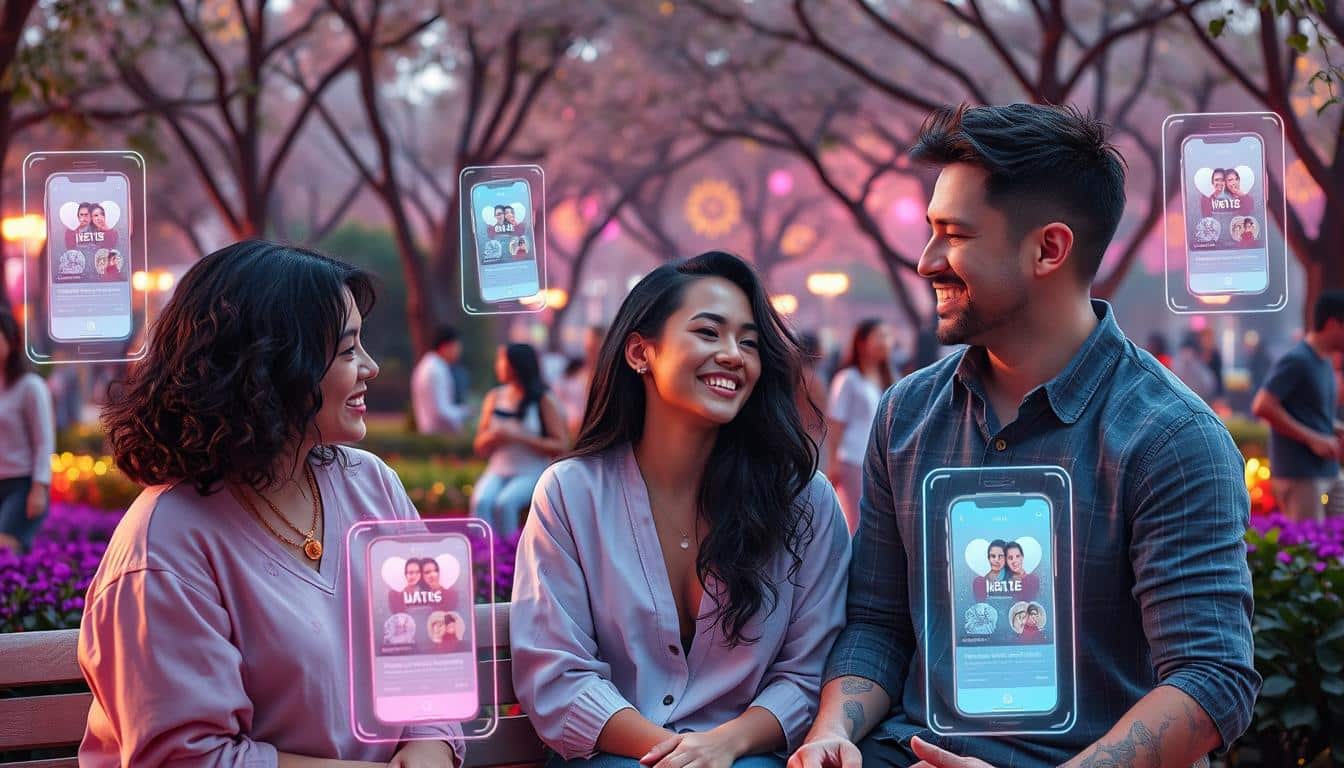
Dating apps have revolutionized American dating culture. This guide aims to help U.S. readers navigate the dating app scene. It offers concise reviews and reliable ratings. We provide practical tips to confidently find love online.
Recent shifts include video-based connections, stronger safety checks, smarter matches, and niche communities. Big names like Tinder, Bumble, Hinge, Match, and OkCupid have evolved. There are also platforms like Grindr, Feeld, HER, and Christian Mingle. These adjustments dictate what we can expect from leading dating apps by 2025.
Anúncios
More Americans have embraced online dating, surveys reveal. Those aged 18–34 are the most active users. Older individuals are gravitating towards Match and eHarmony for serious relationships. Overall, online dating is becoming a key method for finding partners, influencing app features and safety measures.
We use a mix of objective factors and personal experiences to review dating apps. Our ratings consider features, costs, and security. We also look at user experience, ease of starting, and success rates. Each review lists advantages and disadvantages, best fits, a cost overview, and safety information. This helps you find the best app for your dating goals.
Key Takeaways
- Dating apps are central to modern dating—this guide highlights the top apps for 2025, catering to various goals.
- Look forward to video options, enhanced verification, and special-interest groups on different platforms.
- While young adults are the main users, older singles prefer Match and eHarmony for serious connections.
- Our ratings blend objective details (like features, pricing, and safety) with user feedback.
- Each app review clarifies its strengths, weaknesses, pricing details, and who it’s best for.
How to Choose the Best Dating App for You
Starting with a plan is key. Consider what you seek from dating and what is crucial in a partner. Below is a checklist to help balance your aims, the type of users, functionalities, and safety prior to downloading or signing up.
Understand your relationship goals
First, figure out if you’re after a long-term relationship, casual dates, friendships, or hookups. If it’s long-term you want, Match and eHarmony are good choices as they focus on compatibility and future together. They ask questions about your values and life plans right from the start.
Hinge is great for those looking for meaningful connections, thanks to its conversation-starting prompts. For casual flings and quick meetups, Tinder and Pure are your go-to. Bumble, on the other hand, lets women initiate contact, making it stand out for those who prefer a balance of purpose and comfort.
Consider your preferred age range and demographics
Different apps attract different age groups. Tinder and Bumble are popular among the 18–34 set, while Match and eHarmony appeal more to those over 30. Niche apps like OurTime, Christian Mingle, JDate, BLK, and HER cater to older individuals or specific communities based on faith, ethnicity, or LGBTQ+ status. Always check how popular an app is in your location and its active user base to ensure it meets your needs.
Decide between free vs. premium features
Basic free services include creating a profile, some browsing, and a set number of likes or swipes. By paying, you get unlimited likes, more filters, notifications when your messages are read, and features that enhance your profile’s visibility. Paid accounts fit best if you often travel, are in a less populated area, or wish to streamline finding matches. Compare the benefits with your budget to choose between free or paid services.
Assess safety, privacy, and verification options
Choose apps with effective verification and user protection. Tinder and Bumble’s photo verifications, plus safety measures like Noonlight in Bumble and Hinge, are big pluses. Features for emergency situations, comprehensive privacy policies on data use, and in-app communication tools for photos or videos help combat fake profiles. Always verify who you’re meeting, prefer public locales for first dates, and leverage in-app safety features for a safer dating experience.
- Quick tip: Align your dating goals with the app’s focus, verify its user base in your area, weigh free services against premium offerings, and never overlook safety features when deciding.
dating apps: In-Depth Reviews and Ratings
We evaluated each dating app carefully. We tested them on iOS and Android in various U.S. cities. Our reviews combine hands-on use, app store ratings, company openness, and insights from Pew Research.
The aspects we looked at include the size and activity of the user base, and the effectiveness of the matching algorithms. We also considered how good they are at checking profiles and keeping users safe. We looked into the app features, such as search options and video chat, how easy the apps are to use, their cost, and real success stories from users.
Overview of methodology and rating criteria
We put more importance on factors depending on what users want. For people looking for lasting relationships, how the app matches users and keeps them safe matters more.
For casual dating apps, how quickly you can find new people and how many active users there are is more important. How well the apps check users and protect your privacy also greatly affects our ratings. We note if profiles seem active, if the search tools are good, and if features like video calls help prevent ghosting and scams.
Top picks for long-term relationships
Match and eHarmony are great for those wanting serious relationships. They both have thorough questionnaires and systems that focus on long-term pairings.
Hinge is noted for its well-designed interface and prompts that encourage meaningful profiles. It leads to better talks for those looking for true love.
Top picks for casual dating and hookups
Tinder is a top choice for casual dating with its big user base and quick-swiping discovery feature. It’s all about fast connections and immediate responses.
Pure is all about quick, no-strings-attached meetups, designed for instant hookups. Bumble is favored by casual daters who like women to make the first move, adding an extra layer of safety.
OkCupid is great for those with flexible orientations and those who want clear intentions alongside their casual dates.
Best apps for niche interests and communities
Niche apps can make finding the right matches easier. Grindr and HER serve gay, bi, queer women, and nonbinary folks with focused features.
Religion-centered apps like Christian Mingle and JDate, along with BLK for Black singles, and OurTime for daters over 50, help users find like-minded matches. FarmersOnly connects people in rural areas.
Apps like Feeld cater to those into polyamory and kinks. While niche platforms may have fewer users, many also use mainstream apps to increase their chances.
User Experience and Design Comparisons
Choosing a dating app often boils down to its user experience. How smoothly it works and how easy it is to set up a profile matter a lot. Great app design makes people feel comfortable and connected from the start.
Onboarding and profile setup ease
Tinder and Bumble make signing up quick using phone or social media. They let users start swiping fast. Hinge and eHarmony take time to ask questions. This helps create more detailed profiles.
Apps that are quick to join attract more users at first. But apps that ask more questions can make better matches. Designers need to think about what their users prefer.
Search, matching algorithms, and discovery features
Tinder and Bumble focus on swiping. Hinge and OkCupid use your answers and habits to make suggestions. Meanwhile, Match and eHarmony offer detailed search tools.
Others, like Happn, use where you are to help you meet people. Being open about how matches are made can build trust. A good app gives users a mix of surprise and choice in finding others.
Messaging tools and communication safety
Who can message first matters. For instance, Bumble lets women decide. Many apps add features like voice calls and message disappearing for better chats.
For safety, apps offer things like chat moderation and emergency contacts. They also have prompts to help start the conversation. Clear rules and simple ways to report issues make chatting safer.
Mobile app performance and interface design
Top apps update often and are fast. This, along with clear calls to action, makes them easy to use. Making sure the app works well for everyone is key.
But not all apps are this smooth. Some can be slow or look different depending on your phone. Users often dislike apps that drain the battery or send too many alerts.
- Onboarding: fast vs. guided—choose based on user goals.
- Discovery: swipe and algorithm mixes affect match quality.
- Messaging: features plus safety tools reduce friction.
- Performance: stability and parity keep users engaged.
Pricing, Membership Perks, and Value
When choosing between free and paid versions on dating apps such as Tinder, Bumble, Hinge, and Match, understanding what each offers is key. Before committing, compare the costs and perks of different plans. This helps you find the one that meets both your goals and budget.
Free features to try before you pay
Making a profile, looking at matches, and sending some messages are free on most dating apps. They usually limit how many likes or swipes you can do each day. And offer basic suggestions for matching. Using the free version first lets you see what the dating scene looks like in your area.
What premium subscriptions typically add
Paid versions of dating apps offer more. You get to like as many people as you want, use advanced search options, and take back swipes by accident. Subscriptions like Tinder Plus and Bumble Premium bring extra perks. These include knowing who liked you, browsing without being seen, and getting your profile to more people.
Cost-benefit analysis for different budgets
Subscription prices range from about $10 to $40 monthly, depending on the app and its features. Planning for longer terms can make each month cheaper. Premium is worth it if you’re in an area with few matches, need specific filters, or want to be seen more. If money is tight, try buying boosts or short trials instead of long-term plans.
Tips to get the most value from paid plans
Before you pay, look for special deals and check if there are discounts for students or based on age. Short subscriptions are great when you’re traveling or during local events to find more matches. Make sure your profile is good with great photos and a clear bio. Try slightly widening your search to see more people. And remember to stop auto-renewal if you’re just testing out a plan.
Conclusion
Finding the right dating app depends on what you want and where you live. For serious relationships, try Match, eHarmony, or Hinge. Tinder, Bumble, or Pure are good for casual dates. Use niche apps if finding someone with similar interests is key. This summary shows knowing your goals helps pick the best app.
Start with a list of two or three apps that fit your goals and are popular in your area. You should start with the free versions. Create a good profile with various pictures and honest answers. Always follow safety tips, especially when meeting someone new. Then, see if paying for the app really helps you.
The world of dating apps is always evolving. Expect more video dates, AI to help match, and better safety checks. Niche dating communities are also getting bigger. By following these guidelines and keeping up with trends, you improve your chances to find love online safely and efficiently.