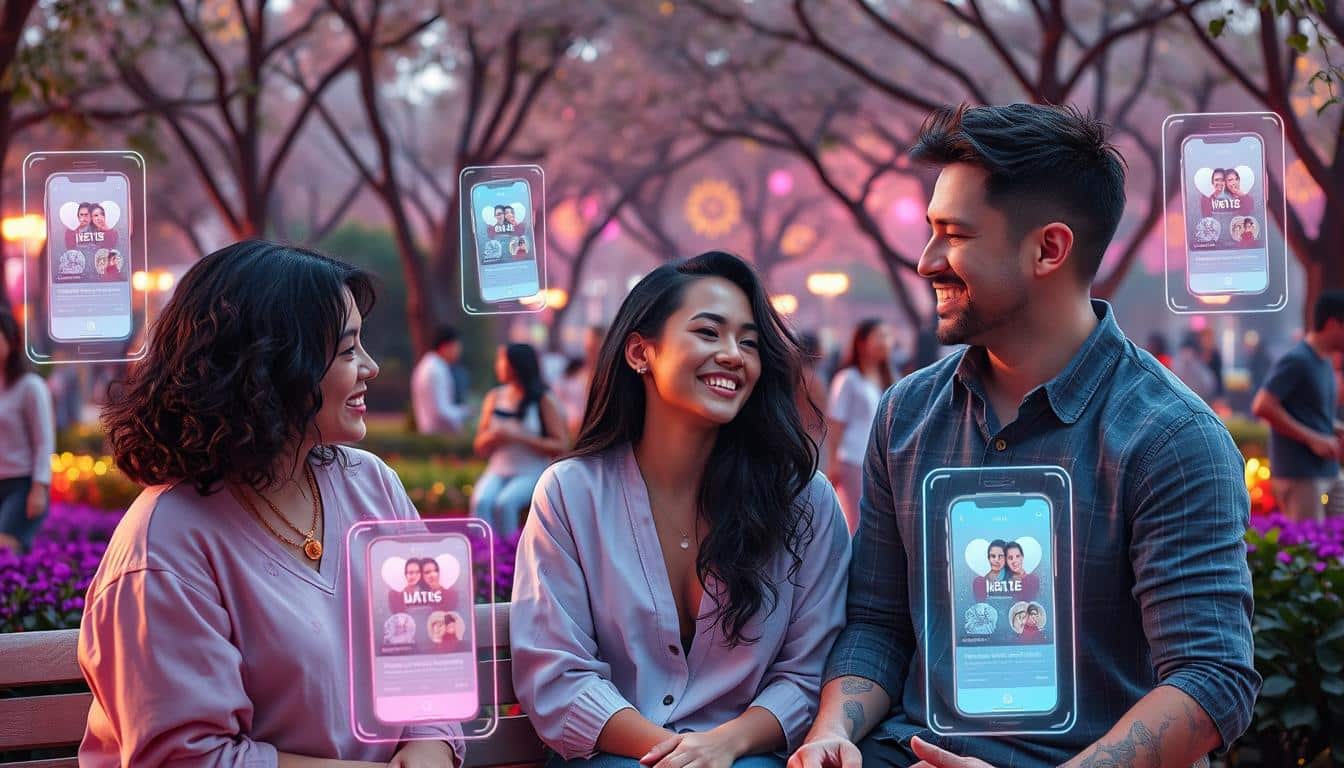
Online dating has become a big part of meeting people in America. Studies and market trends show more people of all ages are using dating apps. Apps like Tinder, Bumble, Hinge, Match, OkCupid, and Grindr are very popular. For those looking for something specific, JDate and Christian Mingle target certain communities. This lets singles pick apps that best meet what they’re looking for.
This guide gives a sneak peek into what’s ahead. It includes comparisons of top dating apps, tips for making your profile stand out, and advice for safe meetups. We also explore what research says about online dating’s impact on relationships and the journey from chatting online to going on dates.
Anúncios
If you’re after something casual, a serious relationship, or a community that shares your interests, this guide on match apps in the US is for you. Learn which platforms are a good fit and how to use them well.
Key Takeaways
- Dating apps are popular with people of all ages in the U.S. and are a common way to meet others.
- Tinder, Bumble, Hinge, Match, OkCupid, and Grindr are leaders in downloads and user engagement.
- Specialty apps like JDate and Christian Mingle cater to particular communities and desires.
- Studies indicate that online dating can lead to relationships, but experiences and timelines differ with each app.
- This article discusses how to choose apps, create engaging profiles, stay safe, and follow etiquette on dating apps for singles.
Why Singles Are Turning to Dating Apps
Many Americans now use digital matchmaking as a regular part of their lives. They turn to apps for making friends, casual dating, or finding a long-term partner. The ease, variety, and specific features of these apps have driven their popularity in making romantic connections.
Growth of online dating in the United States
The Pew Research Center found more adults are trying dating sites or apps. This trend is led by younger people, but older generations are joining in. Downloads and paid subscriptions are going up, showing these platforms have become mainstream.
Who uses these apps varies by age, gender, and where they live. Cities see more users than rural areas. This influences how apps are designed and promoted.
Benefits of using apps vs. traditional dating
Dating apps let people meet others outside their social networks. They use filters to sort by interests, location, and values. This is great for those with tight schedules.
Users have more control with apps. They can set the pace and their boundaries. Tools like prompts and questionnaires help match users based on what they like and want.
Common concerns and how apps address them
Safety and being real are big concerns. Apps like Bumble and OkCupid verify photos and IDs to avoid fake profiles.
Dealing with ghosting and rudeness is common. Apps try to fix this with messages that ask for responses, read receipts for paying users, and tips on good messaging. They also offer video calls to prevent catfishing.
Privacy matters too. Most apps let you control who sees your location and what you share. This helps users feel safe and keeps them using the app.
How to Choose the Best Dating Apps for Your Goals
Choosing the right app depends on what you’re looking for. Do you want something casual, a serious relationship, or a community based on common interests? This choice directs you to the app where you’ll find like-minded individuals.
To start, be clear about your goals. For casual fun, Tinder or Pure are great options. For those seeking love, try Hinge or Match for their focus on connections. JDate, JSwipe, or Christian Mingle are perfect for those who value faith or specific community ties.
Defining what you want: casual dating, long-term, or niche connections
First, make a list of what’s important to you. Consider how often you’d like to go out, if you’re okay with distance, and what you can’t compromise on. Matching these to the app’s vibe ensures you don’t end up somewhere unsuitable.
Think about how quickly you’d like things to move along. If it’s casual you’re after, apps that encourage quick meet-ups might suit you. But if you’re looking for something deeper, choose apps that focus on profiles and getting to know each other. Niche apps are best for finding someone who shares your specific interests or background.
Evaluating app features: matching algorithms, profiles, and messaging
Consider how apps match you with others. Tinder’s location-based approach highlights nearby dates. Meanwhile, Bumble and OkCupid use your interests and their algorithms to find a good match. Hinge goes deeper, using prompts and compatibility signals to start meaningful discussions.
Look into how detailed the profiles are. More information on profiles means more clues about someone’s personality and lifestyle. This is crucial for those wanting something serious. Casual platforms usually have simpler profiles, which may not be as good for long-term connections.
Don’t forget to check out how you can communicate. Some apps have unique ways to start conversations, like voice messages or video calls. Extra features, like user verification, can prevent wasted time. Consider if premium options like profile boosts are worth the cost and if they truly help.
Security and privacy considerations when selecting an app
Your safety is key, from the moment you sign up to when you meet someone. Look for features like two-factor authentication and photo verification. Some apps even partner with background check services for extra safety.
Understanding an app’s privacy policy is crucial. Learn how it uses your location and personal data. Make sure it doesn’t share or sell your information without permission. Checking how the app manages data keeps you informed.
Consider paying for extra security. Subscriptions can give you fewer ads and more control over who sees your profile. Paying a bit extra might be worth it for enhanced safety and privacy on dating apps.
dating apps
This overview gives you a quick look at popular dating apps, their key features, and some numbers. It’s designed to help singles explore their options easily.
Overview of mainstream platforms and their audiences
- Tinder is known worldwide and draws in younger adults. They enjoy its easy swipe feature for casual dates or sometimes more.
- Bumble puts women in charge of the first message. It’s great for those wanting something a bit more serious in a safe space.
- Hinge focuses on relationships with its detailed profiles. These encourage deep conversations among users seeking long-term partners.
- Match.com and eHarmony use subscriptions and detailed processes to find matches. Adults over 30 looking for lasting love tend to prefer these.
- OkCupid has lots of questions and options for everyone. It’s ideal for users who like their profiles to reflect their personalities deeply.
- Grindr connects gay, bi, trans, and queer men via location. It’s for both quick meet-ups and finding community.
- Niche apps like JDate and Christian Mingle cater to specific interests. Whether it’s religion or lifestyle, they offer something unique.
Popular features that drive success on these apps
- Profiles with prompts and photos help show off your personality. This makes finding good matches easier.
- Apps use algorithms and daily suggestions to cut down scrolling. They make meeting the right ones faster.
- With voice and video calls in-app, users can feel the chemistry. They can do this before deciding to meet face-to-face.
- Photo checks and a report/block feature make dating safer. For women, being the first to message also helps.
Data on usage, demographics, and success rates
- Tinder leads with the most users each month. Bumble and Hinge follow, based on their download and activity stats.
- User ages matter, with Tinder and Bumble popular among 18–34-year-olds. Match and eHarmony attract those over 30, affecting match types.
- Success studies show many couples start online. Relationship-focused apps report more long-term successes than those for casual dates.
Match your goals with the right app using this guide. Your best choice depends on what you value: quick dates, lasting relationships, or community based on faith or hobbies.
Top Dating Apps for Different Types of Singles
Choosing the right app depends on your goals, lifestyle, and values. Here are practical dating app suggestions, categorized by common goals. We’ll cover pricing, who you’re likely to meet, and who benefits most.
Best for serious relationships
- eHarmony — Subscription model with a detailed compatibility system and long-form profiles. Audience skews older and relationship-focused. Ideal for those desiring a clear path to commitment.
- Match.com — Paid plans with robust search filters and active user base across age ranges. Perfect for those willing to invest in finding a partner.
- Hinge — Free tier with optional subscription upgrades; uses prompts to start conversations. Attracts users seeking meaningful connections without extensive questionnaires.
Best for casual dating and hookups
- Tinder — Freemium model with in-app purchases and paid boosts; large active user base. Suitable for singles looking for quick matches or local dating scenes.
- Pure — Paid or credit-based model focused on short-term encounters. For those who prefer clear, time-bound arrangements.
- Feeld — Free with optional upgrades; supports open relationships and adventurous meetups. Ideal for couples and singles exploring alternative arrangements.
Best for LGBTQ+ singles
- Grindr — Freemium with premium tiers; popular among gay and bisexual men. Excellent for quick connections and community engagement.
- HER — Free with subscription options; aimed at lesbian, bisexual, and queer women, along with community events. Best for those looking for dating and social spaces.
- OkCupid and Tinder — Both offer inclusive gender and orientation options, attracting diverse queer communities. Useful for broad reach with specific identity preferences.
Best niche apps for specific interests or communities
- JDate and JSwipe — Freemium and subscription models; for Jewish singles seeking connections within their faith. Great for those valuing shared cultural values.
- Christian Mingle — Subscription-focused for Christian singles seeking faith-compatible partners.
- FarmersOnly — Free with paid upgrades; connects rural and agricultural community members. Matches those valuing country life and similar upbringings.
- Bristlr, Tastebuds, and The League — Ranges from freemium to invite-only models; niche apps linking people through facial hair, music, or professional ambitions. Suitable for singles seeking connections based on specific interests.
Use these suggestions to choose a dating app that fits your goals. Start with a free tier to see if it suits you, then explore paid features for better filtering and visibility as needed.
Profiles, Photos, and Messaging That Work
Begin with a clear intent and add small true details. A concise bio should state if you’re looking for a relationship, casual dates, or just friends. This way, people know what you want. Use the profile prompts on Hinge or OkCupid to share your values and give people things to talk about. Keep your sentences short and to the point to avoid sounding like everyone else.
Dating profile tips suggest sharing a favorite weekend activity, an unforgettable trip, or a unique hobby. Instead of saying what you don’t want, use filters for deal-breakers like smoking or not wanting long distance. Giving short examples of what you like helps create better online dating profiles for others to see.
Photos are very important. Start with a clear picture of your face and a full-body shot. Then, add three to six different photos that show your hobbies, travels, pets, and friends. Make sure your pictures are recent and good quality. Try to take them in natural light without using too many filters.
For Tinder and Bumble, choose dynamic action photos. On Hinge and Match, go for pictures that show your lifestyle and personality. Always include a spontaneous or activity photo for genuineness. Avoid making group photos your main picture.
Dating app photos should be a reflection of your daily life. A good rule is if you’d wear it on a first date, it’s good for a picture. This helps keep everyone’s expectations real and avoids weird surprises later on.
How you start a conversation matters. Tailor your messages by mentioning something from their profile or a mutual interest. Ask questions that open up discussion. Try to match the other person’s messaging style and energy. But don’t force being funny.
When messaging on dating apps, stay away from generic lines. Ask a detailed question about a picture or a bio detail. Doing this shows you’re genuinely interested and encourages a more meaningful conversation.
It’s good to have some go-to conversation starters. You can ask about their recent travels, a local favorite place, or how they got into a hobby. Make your questions inviting and easy for them to share stories, not just yes or no answers.
Once you’ve been talking comfortably, suggest a casual video chat or a coffee date. Give a few options for when and let them choose what works best. If they say no, thank them and respectfully move on.
Safety, Privacy, and Etiquette on Dating Apps
Dating apps should make you feel safe and empowered. By following a few simple habits, you can protect your privacy and ensure respectful interactions. Here are tips you can start using today.
Protecting personal information and spotting scams
Avoid sharing personal details like your home address, Social Security number, bank info, or work schedule too soon. Watch for scammers who ask for money, hurry a relationship, or won’t video chat. Look for signs like inconsistent stories or overly perfect profiles to spot scams.
On apps like Tinder, Bumble, and Hinge, use verification features and do a reverse-image search on questionable profiles. If someone asks for money or acts abusively, block and report them. Keep screenshots of fishy conversations to help report them later. These actions help make dating apps safer and protect your privacy online.
Meeting in person safely and smart planning
Choose public, well-lit places for first dates, and go during the day if you can. Let a friend know where you’re going, and share your location using your phone or the app. It’s safer to drive yourself or use a rideshare app instead of getting a ride from your date.
Trying a video call in the app before meeting can help verify the person’s identity and see if there’s chemistry. Always listen to your gut and have a plan for leaving just in case. By taking these steps, you stay safe while meeting people from dating apps without spoiling the fun.
Respectful behavior and ending conversations gracefully
When you’re not interested, it’s best to be honest and polite. A simple message like, “Thanks for the chat — I don’t feel a spark, but good luck!” is effective. It’s better to give some sort of goodbye than to ghost someone; it’s a sign of respect.
Always respect the other person’s consent and set clear boundaries during messages and in person. Don’t pressure anyone into physical contact or sharing personal photos without a clear okay. Learn about safety and reporting through Bumble’s resources, Tinder’s Safety Center, and Hinge’s guidelines. By keeping these practices, you’ll help make dating apps safer, protect your privacy, and encourage respectful interactions.
Conclusion
Start by knowing what you want. Do you seek casual dates, a serious relationship, or something specific? Use this guide to the best dating apps to find the right one. You can compare features, users, and how safe each app is to meet your needs.
Create a truthful profile and choose photos that show who you are. Use smart messages and follow the advice we gave to make real connections. Remember, no one app suits everyone. Your success may vary with different apps like Hinge, Bumble, or Tinder.
Make safety and privacy your top concerns. Turn on verification features, look out for red flags, and meet safely. Being patient and polite helps in finding love online. Try different apps and use what you learn about profiles and safety to get better results in the US.